
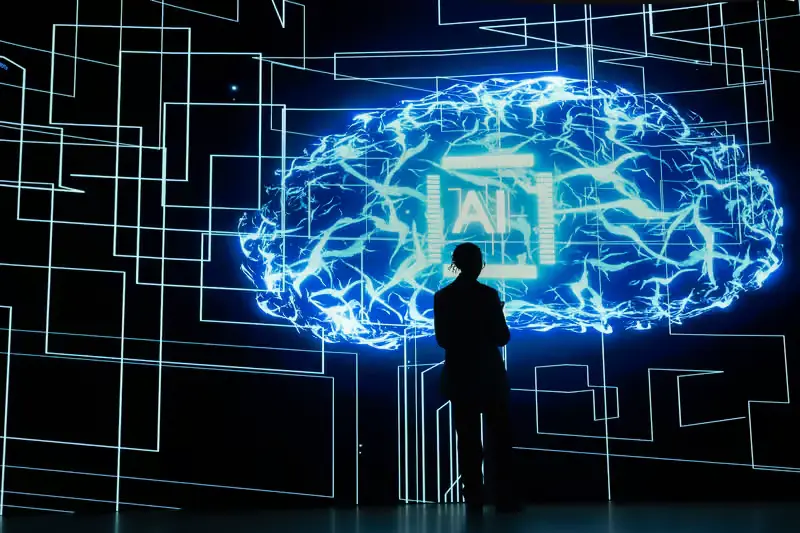
Artificial intelligence has become one of the most influential technologies of modern life. It helps people find information, supports doctors in reviewing medical images, recommends products, detects suspicious financial activity, and allows businesses to automate complex processes. Yet, despite its growing presence, the term is often used without explaining what the technology actually does. Artificial intelligence is not a single machine or application. It is a broad field of computer science focused on developing systems that can perform tasks commonly associated with human intelligence. These tasks include recognizing patterns, understanding language, making predictions, solving problems, and learning from experience.
Traditional software usually follows instructions written by developers. A conventional program receives specific inputs and applies predefined rules to produce an expected result. Artificial intelligence can work differently. Instead of relying only on fixed instructions, an AI system may analyze large amounts of information, identify relationships, and use those patterns to make predictions or recommendations. For example, a traditional email filter might block messages containing certain words. An AI-based filter can examine writing patterns, sender behavior, links, and other signals to estimate whether a message is likely to be spam.
The distinction is important because artificial intelligence does not automatically mean that a machine thinks or understands the world like a person. Most systems are designed for particular tasks. A model trained to recognize objects in photographs cannot automatically provide reliable medical advice or manage a business. Its abilities depend on the data, training methods, design, and environment for which it was developed. Even advanced systems can misunderstand instructions, produce incorrect information, or perform poorly when they encounter situations outside their training experience.
The expansion of artificial intelligence is closely connected to improvements in computing power, data availability, and learning algorithms. These developments have made it possible to train increasingly complex models and apply them across different industries. However, the real value of AI is not measured by how impressive a demonstration looks. It depends on whether a system solves a genuine problem, produces dependable results, and supports better decisions.
The Core Technologies That Make AI Work
Artificial intelligence brings together several technical approaches. Machine learning, neural networks, and automation are especially important because they explain how modern systems identify patterns, process information, and carry out tasks. These technologies often work together, but they do not mean the same thing. Understanding their differences makes it easier to evaluate AI products and recognize what happens behind their interfaces.
Machine Learning: Systems That Improve Through Experience
Machine learning is a branch of artificial intelligence that enables computer systems to learn patterns from data. Rather than requiring developers to write an individual rule for every possible situation, machine learning models use examples to identify relationships and make predictions. A model can be trained with historical information, tested against examples it has not seen, and adjusted to improve its performance.
Supervised learning is one of the most common approaches. It uses labeled examples, meaning that the training data includes both an input and the correct outcome. A model designed to identify fraudulent transactions, for instance, can learn from previous payments labeled as legitimate or suspicious. During training, it examines signals such as transaction amounts, locations, timing, and spending patterns. Once trained, it can estimate the likelihood that a new transaction is fraudulent. Financial institutions can use this estimate to decide whether a payment needs additional verification.
Unsupervised learning works with data that does not have predefined labels. Its purpose is to identify hidden structures, similarities, or unusual patterns. A retailer might use it to group customers according to purchasing behavior. A cybersecurity team could apply it to identify network activity that differs significantly from normal patterns. These systems can reveal useful relationships, although people still need to interpret what those patterns mean.
Reinforcement learning uses a different process. An agent learns by taking actions in an environment and receiving feedback in the form of rewards or penalties. Over repeated attempts, it develops a strategy that aims to achieve a defined objective. This approach has been used in robotics, simulations, and systems that need to make a sequence of decisions. Its performance depends heavily on how the environment and reward structure are designed.
Machine learning is powerful because it can handle patterns that would be difficult to describe through ordinary programming. However, learning from data does not guarantee that a model will be accurate or fair. Poor-quality examples, incomplete information, and changing real-world conditions can weaken its results. A useful model therefore needs careful training, independent testing, and ongoing evaluation.
Neural Networks: Learning Complex Patterns
Neural networks are machine learning models designed to identify complex relationships in data. Their structure is loosely inspired by biological nervous systems, although artificial neurons are mathematical operations rather than realistic copies of brain cells. These networks contain connected units arranged in layers. Each unit receives information, processes it using adjustable parameters called weights, and passes a result to other units.
During training, a neural network compares its output with an expected result. It then adjusts its internal weights to reduce the difference between its prediction and the target. This process is repeated across many examples. A technique called backpropagation helps calculate how the model’s parameters should change, while an optimization method updates them. Over time, the network can learn patterns that help it classify images, recognize speech, translate languages, or process written text.
Deep learning refers to machine learning methods that use neural networks with multiple processing layers. The additional layers allow models to learn increasingly complex representations. In image recognition, early layers may respond to simple visual features such as edges or shapes. Later layers can combine those features to recognize objects or more detailed patterns. Similar principles support speech recognition and natural language processing.
Neural networks have helped advance artificial intelligence because they can process large, complicated datasets without requiring people to manually define every feature. However, their complexity can also make their decisions difficult to explain. A network may produce a highly accurate prediction without offering a simple reason that a person can easily understand. This limitation matters in areas such as healthcare, lending, recruitment, and public services, where decisions can have serious consequences.
Automation: Turning Intelligence Into Action
Automation allows technology to perform tasks with limited manual involvement. Traditional automation generally follows predefined rules. For example, an accounting system may automatically send an invoice when a payment reaches a certain stage. It works well when the process is predictable and the conditions are clearly defined.
AI-powered automation adds the ability to interpret information, recognize patterns, or make predictions before an action takes place. A customer support platform may classify incoming messages by topic, estimate their urgency, and direct them to the appropriate team. A manufacturing system may analyze sensor readings to identify signs that a machine needs maintenance. In both cases, AI contributes an interpretation that helps determine what should happen next.
The strongest applications often combine conventional automation with machine learning. AI handles tasks involving uncertain or changing information, while rule-based software manages predictable steps. This combination can reduce repetitive work and help employees focus on decisions that require judgment. However, automation should not remove human review where errors could cause financial, legal, safety, or personal harm.
How Artificial Intelligence Processes Information and Produces Results
An AI system’s output is only as dependable as the process behind it. Development usually begins with a clearly defined problem. A business might want to predict equipment failures, while a healthcare organization may need assistance identifying suspicious patterns in medical images. The objective determines what information is needed, which model may be suitable, and how success should be measured.
The next stage involves collecting and preparing data. Information may come from documents, transactions, sensors, images, customer interactions, or other sources. Before training begins, developers need to examine its accuracy, relevance, consistency, and coverage. Missing values, duplicated records, outdated information, and incorrect labels can distort the learning process. Data preparation may therefore require considerable effort, even when the final AI application appears simple.
After preparation, developers select a model and train it using an appropriate learning method. They divide information into training, validation, and testing datasets so that performance can be assessed beyond the examples used to teach the model. Testing helps reveal whether the system has learned meaningful patterns or simply memorized details from its training data. A model that performs well during training but poorly on unfamiliar examples may be overfitting.
Deployment introduces another set of responsibilities. A model that works in a controlled development environment may behave differently when exposed to real users, changing conditions, or unexpected inputs. Organizations need to monitor accuracy, response times, security, and the quality of decisions. They may also need to retrain or update a model when the underlying data changes. This is particularly important in areas such as fraud detection, demand forecasting, and cybersecurity, where patterns can shift quickly.
Computing resources also influence performance. Training advanced models may require specialized processors, large storage systems, and substantial energy. Smaller models can sometimes operate directly on devices, which may improve speed and reduce the need to transfer sensitive information to remote servers. The appropriate approach depends on the task, budget, privacy requirements, and expected workload.
Artificial intelligence should therefore be viewed as a complete process rather than a product that automatically produces reliable answers. Data management, model development, testing, deployment, and human supervision all contribute to the final result.
Where AI Is Already Changing Everyday Life and Business
Artificial intelligence has become part of many activities that people use without thinking about the technology behind them. Search engines rank information, navigation applications estimate travel times, streaming platforms recommend content, and smartphones use AI-supported features to improve photographs or recognize speech. These applications are often designed to operate in the background, making the technology feel like an ordinary part of digital life.
Healthcare is one area where AI can provide valuable support. Systems can help analyze medical images, organize patient information, identify patterns in research data, and support clinical decision-making. For example, image analysis software may highlight areas that deserve closer examination by a radiologist. This can help specialists prioritize their attention, but it does not make professional assessment unnecessary. Medical decisions require clinical context, patient history, and an understanding of uncertainty.
In education, AI can support personalized learning by adjusting practice activities to a student’s progress. It can help teachers prepare learning materials, explain difficult concepts, and identify areas where additional support may be useful. However, educational technology must account for differences in learning needs, access to devices, privacy, and the importance of independent thinking. A system that provides instant answers may save time, but students still need to understand the reasoning behind those answers.
Financial institutions use AI to assess suspicious transactions, identify unusual account activity, support customer service, and improve risk analysis. Manufacturing companies apply it to quality inspection, production planning, and predictive maintenance. Transportation services use predictive models to estimate traffic conditions and optimize routes. In customer service, AI tools can categorize requests, suggest responses, and assist employees in finding relevant information.
Businesses can also use artificial intelligence to study customer behavior, forecast demand, and improve inventory planning. A retailer may combine sales history, seasonal patterns, and current demand signals to estimate which products are likely to sell. This can reduce unnecessary stock and help teams plan purchases. Still, predictions are not guarantees. Unexpected events, changing preferences, and incomplete data can make forecasts inaccurate.
The most successful applications are usually designed around a clear operational need. AI may improve speed and consistency, but it does not automatically improve every process. Organizations must consider the quality of their information, the cost of implementation, employee experience, and the consequences of incorrect outputs.
Generative AI and the Next Stage of Digital Creativity
Generative AI has brought artificial intelligence into public attention through systems that can create text, images, audio, video, and computer code. These tools learn patterns from large collections of training data and use those patterns to generate new outputs in response to prompts. They can support creative exploration, communication, research, and software development, but their results need thoughtful evaluation.
Large language models are a major part of this development. They are trained to process and generate language by learning statistical relationships between words and other tokens. When a user enters a prompt, the model generates a response based on the context and patterns learned during training. This ability makes it useful for drafting emails, summarizing documents, explaining technical topics, and producing early versions of written content.
However, a fluent response is not necessarily a correct response. A language model may generate an inaccurate statement, invent a source, misunderstand a question, or present uncertain information with confidence. This behavior is sometimes described as hallucination. Users should verify important claims, especially when they relate to health, law, finance, safety, or current events.
Generative image and video systems offer another set of possibilities. Designers can use them to explore visual concepts, develop early creative directions, or produce reference material. Audio systems can assist with transcription, voice generation, and sound design. Developers may use code-generation tools to explain functions, suggest improvements, or create initial code structures. In each case, the human user remains responsible for reviewing quality, originality, permissions, and suitability.
The value of generative AI is often greatest when it supports an existing creative or professional process. A writer can use it to organize ideas but still needs to shape the argument and check facts. A designer can explore several visual directions but must judge which one serves the brief. A programmer can review suggested code but should test it for security, performance, and correctness. These tools can accelerate parts of a task without replacing the expertise needed to complete it well.
Conclusion
Artificial intelligence is reshaping how people work with information, solve problems, and complete everyday tasks. Machine learning helps systems identify patterns and make predictions. Neural networks support more complex forms of recognition and processing. Automation turns these capabilities into practical actions that can improve efficiency across many industries. Generative AI has expanded the possibilities further by helping people create and interact with digital content.
However, technical capability alone does not guarantee progress. AI systems depend on data, design choices, careful testing, and responsible oversight. They can make errors, reproduce bias, expose sensitive information, and create convincing but inaccurate content. These challenges require clear standards and people who understand both the technology and the context in which it is used.
The strongest future for artificial intelligence is not one in which humans surrender every decision to machines. It is one in which technology handles suitable tasks, helps people recognize useful information, and gives professionals more time to focus on judgment, creativity, and relationships. When innovation is balanced with responsibility, AI can become a practical partner in building more capable and thoughtful organizations.